409A Valuation Providers Compared: Top 7 Picks for 2026
June 12, 2026
Aaron Yeung
CFOs are facing increased scrutiny over private company valuations in 2026. Non-compliant valuations can trigger a 20 percent penalty tax on deferred compensation and higher interest on back taxes. As markets remain volatile and fundraising terms shift, choosing the right valuation partner is becoming increasingly important.
Few providers can adapt to the evolving requirements of different funding stages or withstand audit scrutiny. We’ll compare leading 409A valuation services on pricing transparency, audit readiness, and stage-specific expertise. We also break down how Pulley supports finance teams with defensible valuations grounded in deep equity expertise.
What to prioritize in a 409A valuation provider
Getting your 409A valuation wrong can result in tax penalties for both your company and employees. Here's what to look for when evaluating providers.
Audit defense and documentation quality
Most companies underestimate the importance of audit defense until they're facing scrutiny. A 409A report that can't be defended, namely, one with no visible formulas, no dedicated analyst, and no documented methodology, leaves your finance team with little to stand on if the IRS or your auditors ask questions. Without a defensible report, your company may lose safe harbor protection. The burden of proof shifts back to you to prove the valuation was reasonable, and your employees could face tax consequences.
Ask any provider upfront what the report actually includes and who is responsible for defending it.
Methodology transparency and defensibility
Section 409A recognizes several valuation approaches. The income approach estimates value based on future earnings. The market approach compares your company to similar transactions or public companies. The asset approach values the company based on its underlying assets.
Choosing the right one depends on your stage, capital structure, and industry. Providers should explain which methodology they applied to your case and why. An opaque process is harder to defend, and the wrong valuation methods for your stage can produce a number that's technically compliant but difficult to support at your next funding round or exit. A valuation completed using the wrong methodology may not qualify for safe harbor protection, even if you paid a premium for it. That exposes both the company and its employees. The company may face liability for withholding failures, while employees could see immediate income recognition on vested options, a 20% federal penalty tax on top of ordinary income rates, and additional state penalties that push the effective tax rate even higher.
Turnaround time and revision policy
Look for fast turnaround times and pricing that reflects the complexity of your business. How a firm structures that pricing, whether a flat fee or based on your stage or valuation tiers, will also shape their revision policy. If your cap table changes after you submit your information, or if a material event occurs between engagements, revisions can affect your cost. Make sure you know whether updates are included or come at an added cost before you choose a provider.
Integration with cap table and equity management
Your 409A valuation is only as accurate as the equity data behind it. A 409A valuation first determines your company's overall value using one of the accepted methodologies outlined above. That value is then allocated across share classes (preferred shares, common shares, options, and other instruments) with your cap table providing the inputs. The output is the fair market value of your common stock which becomes the strike price for your option grants. Providers working from a static cap table export introduce version control risk, and any changes between export and submission create gaps that can undermine the accuracy of that allocation. Those that connect directly to your cap table platform reduce this risk by keeping valuation inputs synchronized with your actual ownership records.
Choose a firm that understands your current stage and future trajectory, since early- and late-stage companies have very different valuation needs.
7 409A valuation providers to consider
As more firms enter the 409A valuation space, it’s harder to discern the fundamental differences without a closer look. We’ve reviewed seven well-known providers to show what they offer, where they’re a good fit, and what founders and finance teams should consider before making a choice.
All-in-one 409A valuation providers
Pulley
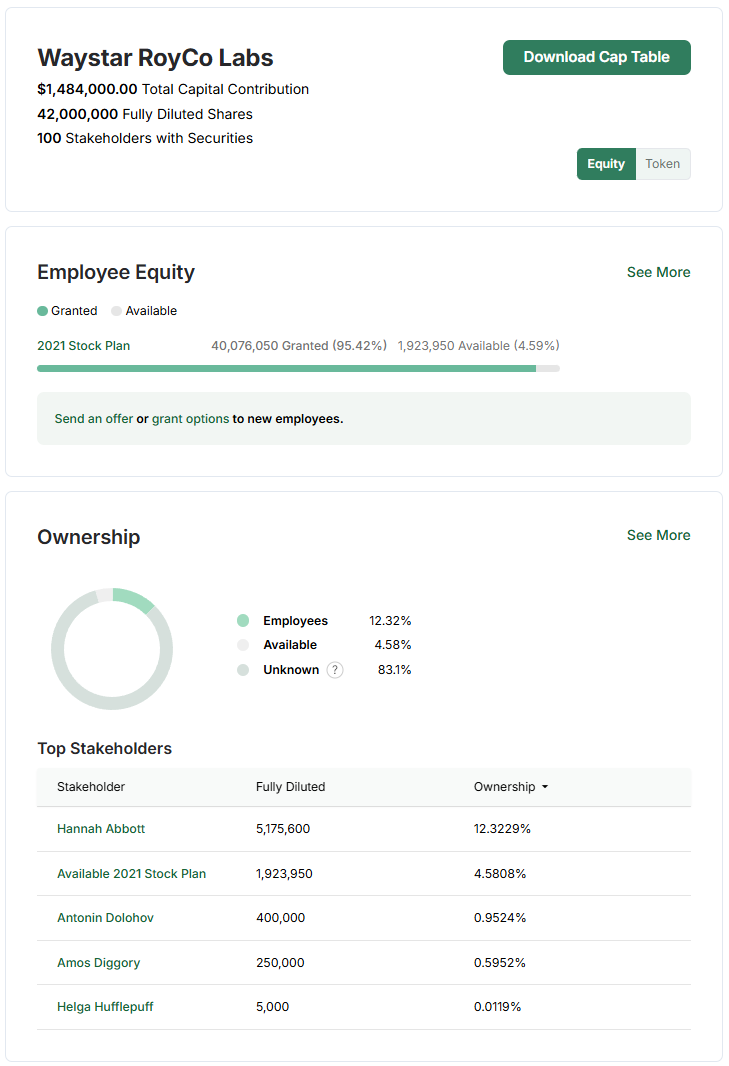
Pulley offers 409A valuations as part of its Growth plan rather than a standalone service. This integrated approach is a core advantage for CFOs. Since accurate valuations rely on up-to-date cap tables and equity data, managing both in one place reduces errors. It also eliminates duplicate work and streamlines the audit process.
Pricing is transparent and bundled into Pulley's Growth plan, which starts at $3,500 per year. There are no hidden fees or upcharges for the valuation itself, making it easier for CFOs to plan. Pulley's bundled model offers predictability while avoiding the à la carte costs often found with traditional providers
Best for: Startups from Seed to late growth stage that need fast, defensible 409A valuations alongside cap table management
Pros: Fast turnaround, built-in audit support, no added cost for valuations, 100 percent audit pass rate
Cons: Not available as a standalone service, but switching and onboarding to Pulley's cap table platform can be done quickly
Carta
Carta includes 409A valuations as part of its equity management platform, making it a convenient option for early-stage startups already using the tool. Conversely, its reliance on a guideline transaction method means edge-case structures might fall outside its optimized template.
Turnaround is typically fast, but more complex scenarios may require extra time or off-platform support. Because the platform bundles valuations into broader pricing, non-customers often find it hard to determine exact costs.
Best for: Early-stage startups with straightforward cap tables already using Carta
Pros: Fast turnaround, bundled with equity platform, widely adopted
Cons: Less flexibility for complex situations, limited transparency on pricing, support varies by plan
Shareworks (Morgan Stanley)
Shareworks provides 409A valuations as part of its enterprise equity management platform, built with public-company governance, financial reporting, and audit standards in mind. The service is best suited for late-stage or pre-IPO companies with complex ownership structures and formal audit requirements.
Sharework's reports are detailed and conservative, and the process emphasizes compliance and documentation over speed. Startups may find the experience slow and less flexible compared to startup-focused platforms. Support can also feel more hands-off unless you're in a higher pricing tier.
Additionally, Shareworks typically bundles valuation pricing into its contracts, making it harder to isolate or compare costs up front.
Best for: Late-stage startups or companies preparing for IPO and audit scrutiny
Pros: High audit defensibility, detailed reporting, trusted brand
Cons: Slower turnaround, enterprise-focused experience, limited pricing transparency
Standalone 409A valuation providers
Stout
Stout is a global advisory firm with a dedicated valuation practice that includes 409A private stock valuations alongside broader financial reporting and tax advisory work. The firm works across industries and company stages, with particular depth in complex securities — including ASC 718 and ASC 820 compliance — making it a strong fit for finance teams managing multiple valuation workstreams simultaneously.
Best for: Growth-stage and later-stage companies with complex equity structures or multi-workstream compliance needs
Pros: Experience with complex valuations, well-documented reports, broad advisory capabilities across 409A, ASC 718, and ASC 820
Cons: Less suited to early-stage companies; pricing not publicly listed
Eton Venture Services
Eton Venture Services is a boutique valuation firm that brings former Big Four consultants and CFA-credentialed analysts to every engagement. The firm has completed more than 10,000 valuations with a perfect audit record, serving clients from early-stage startups through pre-IPO companies. Every engagement includes senior analyst review, with standard turnaround of 7 to 10 business days and a one-day expedited option available for urgent timelines.
Best for: Private companies at any stage, especially Series A, Series B, and Series C startups that need an independent, safe harbor-compliant 409A valuation.
Pros: 10,000+ completed valuations with a perfect audit record, senior analyst review on every engagement, deep experience with complex cap tables, expedited turnaround available.
Cons: Pricing requires a direct quote, and the firm lacks ASA/ABV credentials that some auditors prefer.
Andersen
Andersen is a national tax and advisory firm that provides 409A valuations with a focus on audit defensibility and regulatory compliance. Its process is conservative and documentation-heavy, which may appeal to late-stage companies, especially those preparing for IPO or M&A — or facing board or audit scrutiny.
The trade-off is speed and flexibility. Andersen follows a traditional consulting model, which often means longer timelines, more overhead, and less responsiveness to startup-specific cap table nuances. Its services are built for audit defensibility and board-level scrutiny, which often align with higher-end pricing of $5,000+, especially for complex or pre-IPO companies.
As a result, Andersen's service may not be ideal for companies operating on aggressive fundraising timelines.
Best for: Late-stage companies with formal audit requirements or upcoming exits
Pros: Strong audit defensibility, conservative approach, established brand
Cons: Slower process, likely higher cost, less flexible for startups
Scalar
Scalar is an independent valuation firm known for handling complex 409A cases, particularly for growth- and late-stage startups. The company focuses on tailored valuation solutions, providing expertise for companies navigating complex equity structures.
While Scalar excels at complex, one-off valuations, its model may be less suitable for founders who prioritize a proactive, software-driven approach to cap table management.
Best for: Growth- and late-stage startups requiring deep expertise for complex valuations
Pros: Deep experience with complex scenarios, trusted legacy brand
Cons: Service quality and responsiveness may vary based on engagement scope
No single provider is right for everyone. But by understanding how these firms compare, you can choose one that matches your stage, timeline, and audit needs.
How 409A needs differ by company stage
409A valuation needs can vary widely depending on where a company is in its journey. A seed-stage startup, for example, has very different priorities than one preparing for an IPO. Your valuation strategy should evolve accordingly.
Early on, speed and cost are often the most significant concerns. Founders are navigating changing cap tables, SAFEs, or convertible notes, and they need a defensible number before issuing option grants. If the valuation meets a basic level of scrutiny, lightweight or bundled services can be a practical fit.
As companies move into Series A and beyond, the process becomes more demanding. New funding rounds reshape the equity story, and audit expectations start to rise. Finance teams at this stage should focus on accurate inputs, clear documentation, and a responsive valuation partner.
Not surprisingly, late-stage companies face the highest scrutiny. IPOs, M&A deals, or large secondary events bring added pressure from legal, audit, and tax teams. These valuations often require longer lead times and more extensive documentation.
Choosing the right provider for your stage is critical. A fast, bundled solution may be ideal at seed, but as complexity grows, so does the need for defensibility and depth. This table shows how each stage differs.
* Audit risk reflects external scrutiny levels by stage, not Pulley's methodology standards. Our approach to defensibility is consistent regardless of stage
Knowing when to switch providers or upgrade service levels matters as much as knowing which provider to choose. If your current provider can't meet your hiring or grant timelines, struggles with more complex cap table structures, or can't produce the documentation depth your auditors expect, then it might be time to reassess. The same applies ahead of a material event like a new funding round or exit.
Pulley's integrated approach scales from seed through growth, so finance teams don't have to make that switch as complexity increases — the cap table and valuation stay connected in one platform throughout.
Why finance teams choose Pulley
For finance teams that need valuations they can stand behind, Pulley's 409A service is built around the outputs that matter most at audit time: a defensible report, a named analyst, and an equity record that stays accurate between engagements.
A named in-house analyst completes every Pulley 409A valuation and delivers an explorable report that shows the formulas and inputs behind the final number. That level of transparency is what allows finance teams to answer auditor questions with confidence, rather than going back to a provider for explanations. Pulley's in-house valuations carry a 100% audit pass rate.
Most valuations complete in three to five business days. Pricing is included in Pulley's Growth plan beginning at $3,500 per year, with no surprise renewals or per-valuation upcharges — which makes budgeting straightforward and removes the cost uncertainty common with standalone providers.
Because valuations run natively on Pulley's cap table platform, equity data flows directly into the valuation process — and automates what would otherwise require manual exports and reconciliation. For teams switching from another provider, Pulley includes concierge migration support to move cap table data quickly and accurately.
Finding the right 409A valuation provider for your startup
The right 409A valuation provider holds up when it matters — at your next audit, funding round, or key hire. As you evaluate your options, prioritize audit defensibility, methodology transparency, and integration with your cap table. Vendors that eliminate fragmentation between your cap table and valuation give finance teams a cleaner audit trail and less manual work at every stage.
Pulley is built around that integrated approach, from your first valuation through the complexity of growth. Book a demo to see how it works.
FAQ: 409A valuation providers
How much should a 409A valuation cost in 2026?
Prices range from $2,000 to $5,000+, depending on complexity. Some platforms bundle valuations with cap table tools. Providers usually scale costs based on stage, documentation needs, and number of share classes.
Can you switch 409A valuation providers mid-year?
Yes, but mid-cycle switches are rare unless issues arise. They can introduce inconsistencies in valuation methods or timing. When changing providers, ensure the new firm can review prior reports and align with your current documentation standards.
Do you need to use the same provider for your cap table and 409A valuation?
No, but misaligned systems create data gaps and version control risk. Integrated providers eliminate that fragmentation, keeping equity records and valuation inputs accurate and synchronized.
How long does a 409A valuation typically take?
Simple cases can wrap in five to seven days; complex valuations may take up to three weeks. Concerns like new funding or multiple share classes add time.
What's the difference between a standalone 409A provider and an integrated platform?
Standalone business valuation providers deliver the report only. Integrated platforms connect directly to your cap table, reducing manual data entry, version control risk, and vendor coordination.
How often should you refresh your 409A valuation?
Most companies refresh their financial statements every 12 months or after a material event, such as a fundraising round, a major acquisition, signing a strategic customer, establishing a stock plan to issue new equity, or shifting market conditions. Staying current protects safe harbor status and keeps grants defensible. Fast-growing startups may need more frequent updates to reflect shifting valuations.
Switch to Pulley
Pulley simplifies equity management - Cap tables, 409a valuations, SBC reporting, scenario modeling, SAFEs, RSUs, options, and more.

By subscribing you agree to our Privacy Policy.